Translate

Tuesday, June 30, 2009

The Gospel According To Tolkien

It should be less than surprising to know that J.R.R. Tolkien was a Christian, and that he included Christian themes in his stories (especially the Lord of the Rings series). But exactly what does he say? Is Gandalf a Christ-figure? Is Samwise's humility and perseverence mirrored in the Bible? What illustrations does the friendship between Legolas and Gimli show? Tolkien's works aren't a direct allegory as are the novels of C.S. Lewis, so it may be a bit harder to tease out the truths.

This is where Ralph Wood comes in. His book, The Gospel According To Tolkien, seeks to detail the elements of Christianity in Tolkien's works. Readers should keep in mind that this book relies on the complete written works of Tolkien and so goes far beyond the movies directed by Peter Jackson. For those of you who haven't read the books, or have limited yourselves to the ones upon which the movies are based, you might find yourself lost at some of the references.

This book is definitely written for hard-core Tolkien fans. It's also written for those wanting a very detailed exploration into the Biblical themes of the books. While I found the discussions elightening, and will make me look at the source material in a different light, I also found it a bit dry, and couldn't read much at a time. That's not a bad thing, but I would not call this a casual read.

My recommendation? If you want a detalied study and are looking for deep discussions, and you are a big Tolkien fan, then pick up this book. If you've only seen the movies or want a lighter read, you may want to pass.

Saturday, June 20, 2009

Do You Trust Him?

Last week at church, I closed the service with a quick poll. I asked everyone "Do you believe that God will do what He says He will do?" Everyone raised their hands. "Do you trust God?" Again, all hands raised. Then I asked "Who is willing to prove it?" Suddenly there were only a few hands raised. The topic I was talking about was a challenge we are having in the church. Give your tithe for six weeks, and if at the end of that you don't feel like God is blessing you, we will refund all of the money you gave. Pretty easy challenge, right? No long-term risk since you get your money back.

So do we really trust God? It's easy to read the Bible, see the promises, and say "yes, I trust Him." We talk a lot about how much God does for us and how He never lets us down. But when it really comes to proving it, how many of us will go out on a limb and truly put our full trust in God? When we're pushed and challenged to let it all go and turn it over to Him, many (if not most) people find this difficult.

Why? If we're not willing to "let go and let God", then it means that we actually don't trust Him. Despite all of our bluff and bluster, it's not that easy to put actions to words and truly rely on all of His promises. But why not?

So I challenge you to prove it. Read the Bible. Look at His promises. See if he has ever let you down. And then truly and honestly trust Him and do what He says.

Sunday, June 7, 2009

Singing Love Songs

You've all seen the movies or plays where the man stands at the bottom of a woman's window or balcony and serenades her with a love song. Even if he is tone-deaf, the feelings behind it and the emotions he portrays make it very touching. He's not just going through the motions or just mouthing the words.

When we're in church, most of us begin the service by singing songs of praise and worship. The idea is that we are supposed to be lifting our hearts and voices to God, telling Him how wonderful He is and how much we appreciate everything He has done for us. But these songs are well know to us, and we sing some of them so many times that our minds can wander while our lips frame the words. It's so routine and so patterned that we just expect to stand and sing for the first twenty or so minutes of a service.

Is that really worship? Can your heart be in the right place if you're sipping your coffee or water in between verses? If you loose your place in the song because you weren't paying attention, are you really concentrating on God? Where is your heart and your mind focused when the words come out of your mouth? Do you even realize what it is that you're singing?

It's easy for us to take a familiar song and just go through the motions. I challenge you to do something different. Pay attention to each and every word that you sing. Really think about what it is that you're saying. And most importantly of all, imagine that you're standing below God's balcony, singing Him a love song. You'll be amazed at the difference this can make.

Sunday, May 31, 2009

Our Unseen Influence

Yesterday my family and I went to the Georgia Renaissance Festival. This is an annual event for us and as you can see by my pictures we like to dress up. Anyone who knows me or reads my blogs shouldn't be too surprised by this fact. While there my wife was looking at getting a new corset, and we were talking to the guy at the shop. We mentioned that part of the reason for her corset was that we were going to do a Victorian/Steampunk Justice League for Dragon*Con, and my wife and I were doing Black Canary and Green Arrow. This piqued the man's attention, and we talked some more. When I mentioned that this was going to be with some friends of us from an internet forum, he asked which one. I said "Fans For Christ" and briefly mentioned what we were about. He looked mildly surprised and said that it was nice to see Christians who weren't against these things.

My impression is that he has encountered Christians who condemned him because he was interested in Steampunk, Ren Faires, and had earrings. And unfotunately, many mainstream Christians would indeed look down on him for this. That attitude has likely given him a negative attitude about Christianity, and may have kept him from looking much into it. I hate to say it, but I can't really blame him, as I had a similar attitude at one point before really knowing Jesus.

We as Christians have incredible influence on people around us, both for good and for bad. Whether we want to or not, we can make someone not want anything to do with Christ, or make someone want what we have. As a Christian, which will you do? Will your attitude and actions drive people away from God or draw them to Him? Will what you say and do condemn or judge people, or will it show them the all-inclusive love of Jesus? How willl your words and deeds be viewed by those who don't know Christ and may be apprehensive about religion?

Hopefully we gave him a different perspective of Christians. That's what Fans For Christ is all about. And maybe one day that seed will grow into a full-fledged Christian.

Sunday, May 24, 2009

The Magic In Christianity

A friend of mine on another forum posted this recently in a discussion about Christianity. I thought that she did such a great job and was excited and moved by the post, so I got her permission to re-post it here.....

I know how boring Christian writings can be. They're soaked in philosophy and thinking-thinking-thing, or they seem like they're all about bossing us around. Many of them are dusty and stagnant and over-translated. If you read about Christianity from the outside, it can be the intellectual equivalent of choking down dry toast on a sore throat. I get that.

But from the inside, it's nothing like that. I want to try to describe what it *feels* like. No judgments or insinuations that it ought to be like this for you; just my personal experience of the sensation of having faith, with some generalization of other Christians based on who I've talked to. For those of you who're uncomfortable about this sort of thing, take this as due warning.

Faith is a passion that feels a great deal like love. It can be warming like a balm to the soul, or burning, a fire that sears you and everything around you. Like love, it's separate from happiness and misery and even hate, and it can be the source of all of those. You can hate and love at the same time. You can believe and love and hate and want to move forward and run away all at the same time. It all depends on how you relate to your passion--your faith, your love--and the target of it. And how you relate to it can change depending on the day and what's happened recently.

Like love, faith can be nurturing or abusive. I've met Christians who frankly wished (at least at times) that they could shuck their faith and be rid of the burdens it motivated them to take up. In fact, I dare to say that every...I'll say serious Christian has or will at some time share that feeling. Because some days, it *sucks* to care, it *sucks* to be made fun of, to care about people and watch them hurt, to put yourself out and break your back or your heart to help people. Sometimes, in fact, you wash your hands of it for a little while because you just can't find the strength to keep going. But always, you pick yourself back up and do it again, put yourself through that again, because you know it's right and you love them and you want to and can help. Faith is also like honor that way, prodding you toward your duty, no matter how much that duty hurts. It can, quite literally, drive you to quests. As all the world knows.

And what's special about Christianity with all this is how far it asks you to go, and exactly what it wants of you. Most religions agree that there is great suffering in the world--it's fairly obvious. Some ask you to ease that suffering. But Christianity throws it baldly in your face: as a human, you have the capacity to love and to suffer. To love is to suffer, to hurt when the things you love hurt. Christianity takes it a step further: it asks you to take their pain away from them when you can, and to bear it upon yourself. God asks you to hurt, because everyone suffers, but through the divine alchemy of generosity, that suffering taken on willingly can become something better than just the ugly, dirty pain of life.

It's hard for Christians to show people that it's not just a dry faith of words. There's *magic* at the heart of Christianity. It's the most ancient, primal magic--blood sacrifice, self-sacrifice--and also it's no coincidence that the Christian tradition harbored the Western tradition of alchemy. It's transformative...and all sorts of transformation involve death in some respect--the death of the past, the loss of what was before the change. Christianity seeks to conquer the fear of change/death by ensuring that what you become will be better than what you were. Life after death is an extension of this--perhaps a metaphor for it, or maybe those small changes are metaphors for the big one.

Sunday, May 17, 2009

Understanding The Potter

Yet, O LORD, you are our Father.
We are the clay, you are the potter;
we are all the work of your hand.
Isaiah 64:8

This is a pretty famous verse and concept that most Christians know, and has been included in many bible studies, hymns, and contemporary praise and worship songs. But how many of us really understand the depths of this simple verse?

Have any of you done pottery, or watched a potter at work? It's pretty serious stuff. The potter starts with a simple ball of clay, and pounds it roughly into a firm lump on the wheel. Then as the wheel spins, the potter reshapes it with his hands. Over time, the lump of clay becomes something completely different. The process itself is pretty rough on the clay and pretty messy. Bits of clay may be worn off or cut off. There is a lot of water, and the potter's hands become covered in the mud and clay. The clay is radically changed from a useless clump to a useful instrument. But once a pitcher, cup, or pot is formed, it's still not finished. If we tried to put anything in it at this time, it would fall apart. To be truly finished, the object must be fired in a kiln. It must be put through intense heat and fire before being useable.

Isn't this so much like how God works in our lives? When we come to Him we are useless and unformed. He begins to mold us, but it's not easy or pretty. It's pretty messy, and bits of us may be pulled off. Those are bits that we don't need, even if we think we do. By the time God is finished with shaping us, we probably can't be recognized as the same thing He started with. And to truly finish us, God must put us through the fire of trials. It is in the kiln of trouble and tribulation that we finally become what we should be.

When you feel the heat of the fire, feel yourself stretched beyond your shape, and feel bits of yourself coming off, just think of yourself as a lump of clay. God is molding you into something beautiful that He can use. The process might be rough, but the end result will be worth it.

Consider it pure joy, my brothers, whenever you face trials of many kinds, because you know that the testing of your faith develops perseverance.
James 1:2-3

Tuesday, May 12, 2009

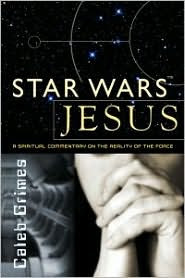
Star Wars Jesus

I've been a fan of Star Wars ever since seeing it in the theater way back in 1976. I remember the lines snaking completely around the movie theater, and the excitement with which I saw it repeated times. I had the toys, books, and so many other things. For my generation, these movies were our mythology and one we have passed on to our children. These movies have remained popular for over 30 years, and continue to inspire people of all ages. So when I decided to look for a new devotional, I explored ones using the Star Wars films. There were several choices, so based on reviews on Amazon I picked Star Wars Jesus.

And I'm very glad that I did. Caleb Grimes is obviously a fan of the series and very passionate and knowledgeable about the films. Other books I have seen talk about the Christian themes found among the Jedi, so it was no surprise that Grimes uses that heavily. What surprised me was how he pulls from all six Star Wars films to show the journeys of various characters. One of the themes that particularly struck me was the lessons learned from Luke Skywalker's life. He goes from a young, brash teenager dreaming of greater things to a mature balanced man who refuses to give into the darkness within him. The story of Anakin/Darth Vader is also interesting as a study of how we can give into sin and darkness, but how we can also receive redemption.

Grimes has a very approachable writing style that presents his ideas in a clear manner that makes the points easy to understand. But even with this simple style, there is still great depth to the discussion and there are some very Biblical lessons to learn. One downside of the book is that there are 101 entries, so Grimes sacrifices depth for breadth. That's not necessarily a bad thing, as there is a lot of material to cover in the six movies. Some of these entries are longer than others, so there is detailed discussion where appropriate. Occasionally an entry really seems almost forced just for the sake of reaching the "magic" 101 mark. But the large majority of the entries are very worthwhile, and well worth the read.

This book has given me several ideas for future sermons, and I plan on re-reading it a couple of more times. If anyone comes to Dragon*Con this year, I may just be talking about ideas I found in this book. If you see a sermon there titled "Red Five, Standing By", rest assured that I took ideas from Grimes' book (and will give credit for it). Yes, all of this means that I really like the book, and highly recommend it.